
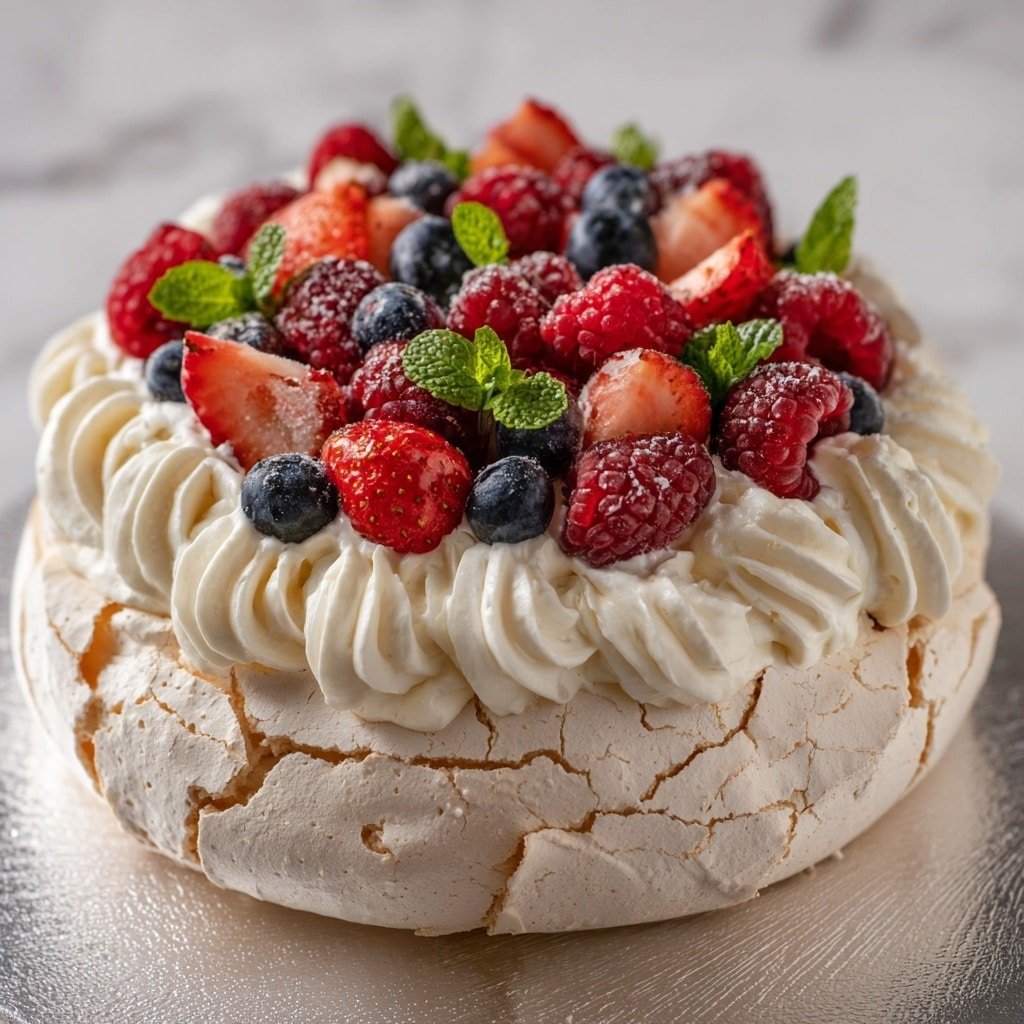
The Classic Pavlova with Fresh Fruit Recipe is a light and airy dessert that’s perfect for warm weather gatherings or any time you want something sweet but not too heavy. I love making it when fresh fruits are in season because it adds a burst of color and natural sweetness. You’ll notice how the crisp-edged meringue pairs beautifully with the creamy whipped topping and juicy fruit—making every bite irresistible.
Jump to:
In the Kitchen
This classic dessert shines because its texture and flavor balance are truly special. I’ve found that a few simple tricks take the pavlova from good to unforgettable.
- Juicy and Tender Every Time: The fresh fruit topping adds vibrant flavor and moisture that plays beautifully against the crispy meringue.
- Golden, Satisfying Finish: Baking low and slow gives the pavlova a gentle golden crust with a marshmallow-soft center.
- Simple Ingredients, Big Impact: Just eggs, sugar, cream, and fresh fruit create something that feels fancy but is easy to pull off.
- Weeknight to Weekend Ready: You can whip this up ahead on a busy day or save it for special occasions.
Ingredients at a Glance

Choosing the right ingredients really makes or breaks your Classic Pavlova with Fresh Fruit Recipe. Fresh eggs and ripe, colorful fruit are key to punching up flavor and texture.
- Egg Whites: Use large, fresh eggs for the best volume when whipping meringue.
- Granulated Sugar: Adds sweetness and helps stabilize the meringue's crisp structure.
- Vanilla Extract: Pure vanilla gives a warm, inviting aroma.
- White Vinegar: Stabilizes the meringue and keeps it glossy.
- Cornstarch: Creates that signature marshmallow-like texture inside.
- Heavy Cream: Whip until stiff peaks for a luscious topping.
- Powdered Sugar: Sweetens the cream without graininess.
- Fresh Fruits: Kiwi, strawberries, blueberries—pick fruits that are vibrant and firm.
Heads-Up: Exact measurements are in the printable recipe card at the bottom.
How to Make Classic Pavlova with Fresh Fruit Recipe
Step 1 — Prep Your Oven and Parchment
Start by preheating your oven to 250°F (120°C). Line a baking sheet with parchment paper and then draw a 9-inch circle as your guide to shape the pavlova. This little prep step helps keep your meringue round and neat, which I’ve learned is worth the extra minute or two upfront.
Step 2 — Whip the Egg Whites Until Soft Peaks Form
In a large, clean bowl, beat the 4 egg whites on medium speed until soft peaks start to emerge. You’ll know they’re ready when the peaks hold but still gently fold over at the tips. This stage is crucial because it sets the foundation for a stable, airy pavlova.
Step 3 — Gradually Add Sugar and Flavorings
Slowly add 1 cup of granulated sugar, one tablespoon at a time, beating after each addition until the meringue is glossy and stiff. Then stir in 1 teaspoon each of vanilla extract and white vinegar, plus 2 teaspoons of cornstarch. These ingredients help the pavlova hold its shape and keep that slightly chewy inside.
Step 4 — Shape the Meringue and Bake
Spoon the meringue mixture onto the parchment inside your circle. Use the back of your spoon to spread it evenly, creating a slight depression in the center—this is where the whipped cream and fruit will sit later. Bake for about 1 hour and 15 minutes, then turn off the oven and leave the meringue inside to cool completely with the door slightly ajar. This slow cooling helps prevent cracks and keeps the texture perfect.
Step 5 — Whip the Cream and Add Fresh Fruit
While your pavlova cools, whip 1 cup of heavy cream with 2 tablespoons of powdered sugar until you get stiff peaks. Once the meringue is cool, gently spread the whipped cream over it and pile on your fresh fruit. I like a mix of kiwi for tartness, strawberries for sweetness, and blueberries for that pop of freshness.
Things to Remember
Having made many pavlovas, I’ve picked up some key tricks that make your dessert flawless every time.
- Doneness Cue: The pavlova should be dry and crisp on the outside but soft and marshmallowy inside.
- Temperature Trick: Keep your oven low and avoid opening the door during baking to prevent collapse.
- Make-Ahead Move: Baking the meringue a day ahead lets it rest properly and makes assembly quicker.
- Common Pitfall: Any grease or egg yolk in your whites will prevent stiff peaks—make sure your bowl and beaters are spotless.
Ways to Serve It

Finishing Touches
I love topping my Classic Pavlova with Fresh Fruit Recipe with a generous layer of whipped cream because it balances the sweet and crisp meringue perfectly. The fresh fruit adds juicy, tart notes that keep the dessert bright and refreshing—plus the colorful presentation is always a crowd-pleaser.
Plays Well With
This pavlova pairs beautifully with a light dessert wine or sparkling water with a squeeze of lime. For added texture, sprinkle a few toasted nuts like pistachios or almonds on top—they add a delightful crunch against the soft layers.
Simple Plating Upgrades
If you’re making this for a special occasion, try piping the whipped cream into pretty rosettes and creatively arranging fruit slices for a pretty presentation. A dusting of powdered sugar or a sprig of fresh mint instantly elevates the look with minimal effort.
Make-Ahead & Keeping Fresh
Storing Leftovers
If you happen to have leftovers (which is rare!), store them in an airtight container in the refrigerator for up to 2 days. Keep the whipped cream separate if possible to prevent the pavlova from getting soggy, since the meringue loves to soak up moisture quickly.
Freezing Tips
Meringue doesn’t freeze well once it's topped with cream and fruit because it can get watery. However, you can freeze just the baked meringue shell in an airtight container for up to a month. Thaw it at room temperature completely before assembling your toppings for best results.
Reheating Classic Pavlova with Fresh Fruit Recipe Without Drying Out
Since pavlova is best enjoyed fresh, I don’t recommend reheating the assembled dessert. But if you want to freshen up a crust-only pavlova shell, briefly warm it in a 300°F oven for 3–5 minutes to restore some crispness. Avoid microwaving or reheating once topped, as this can cause the cream and fruit to break down.
Frequently Asked Questions
Absolutely! The meringue shell can be made up to a day ahead and stored in an airtight container at room temperature. This helps free up time on serving day and keeps your pavlova crisp.
Cornstarch helps stabilize the meringue during baking and cooling, giving the inside that soft, marshmallow-like texture that’s so characteristic of a classic pavlova.
Definitely! Feel free to use any firm, juicy fruits you love like raspberries, passionfruit, or mangoes. Just avoid overly watery fruits to keep the meringue crisp.
Small cracks are normal and don’t affect taste. To minimize cracking, cool the pavlova slowly in the oven with the door slightly open, as sudden temperature changes can cause it to crack.
Final Thoughts
Making this Classic Pavlova with Fresh Fruit Recipe is such a rewarding experience—each step feels celebratory, and the payoff is a dessert everyone will rave about. I hope these tips help you nail the perfect pavlova every time. Remember, it’s all about patience in the kitchen and enjoying the process as much as the delicious result. Happy baking!
PrintFull Printable Recipe
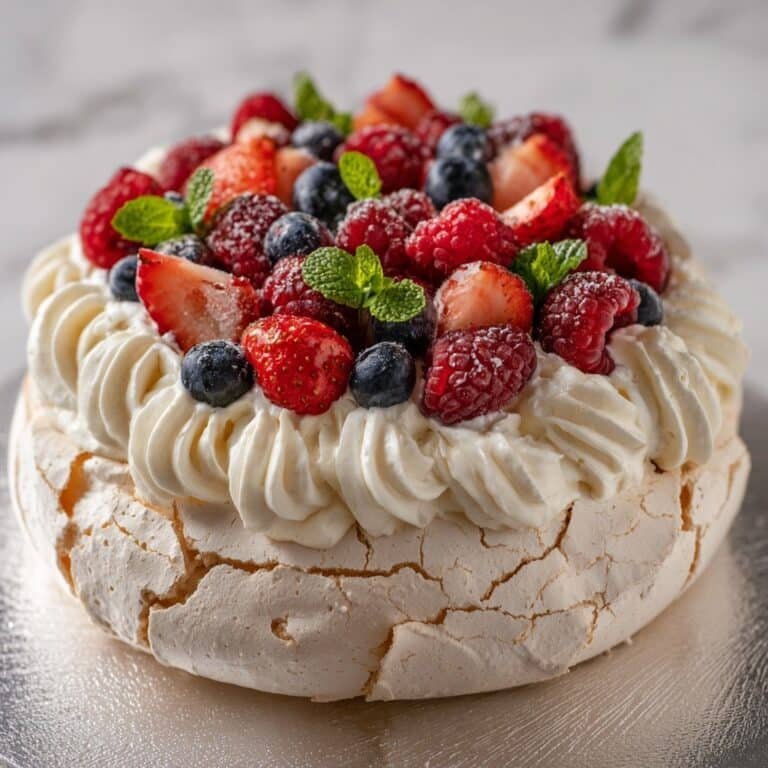
Classic Pavlova with Fresh Fruit Recipe
A classic Pavlova recipe featuring a crisp meringue base topped with whipped cream and fresh fruits, perfect for a light and elegant dessert.
- Total Time: 1 hour 35 minutes
- Yield: 8 servings
Ingredients
Meringue
- 4 egg whites
- 1 cup granulated sugar
- 1 teaspoon vanilla extract
- 1 teaspoon white vinegar
- 2 teaspoon cornstarch
Topping
- 1 cup heavy cream
- 2 tablespoon powdered sugar
- 1 cup fresh fruits (kiwi, strawberries, blueberries, etc.)
Instructions
- Preheat the oven: Preheat your oven to 250°F. Line a baking sheet with parchment paper and draw a 9-inch circle on the paper.
- Beat egg whites: In a large bowl, beat the egg whites until soft peaks form. This ensures the meringue will be light and airy.
- Add sugar gradually: Gradually add the granulated sugar one tablespoon at a time, beating well after each addition until the mixture is glossy and stiff peaks form.
- Incorporate vanilla, vinegar, and cornstarch: Beat in the vanilla extract, white vinegar, and cornstarch to stabilize the meringue and provide the characteristic texture.
- Shape the meringue: Spoon the meringue onto the parchment paper inside the drawn circle, spreading it evenly and creating a slight indentation in the center for the toppings.
- Bake the meringue: Bake in the preheated oven for 1 hour and 15 minutes. After baking, turn off the oven and leave the meringue inside with the door slightly open to cool completely. This prevents cracking.
- Whip the cream: In a separate bowl, whip the heavy cream and powdered sugar together until stiff peaks form for a light and fluffy topping.
- Assemble and serve: Once the meringue is fully cooled, top it with the whipped cream and arrange fresh fruits on top. Serve immediately for optimal texture.
Notes
- Ensure egg whites are at room temperature before beating for better volume.
- Use fresh, high-quality fruits to enhance flavor and presentation.
- Do not open the oven door during the initial baking time to prevent collapse.
- The meringue can be prepared a day ahead and stored in an airtight container.
- If you prefer, use other fruits like peaches or passionfruit for variation.
- Prep Time: 20 minutes
- Cook Time: 1 hour 15 minutes
- Category: Dessert
- Method: Baking
- Cuisine: Australian, New Zealand
- Diet: Vegetarian


Leave a Reply