
The Classic Italian Panettone with Dried Fruits Recipe is a delightful holiday bread bursting with sweet, fragrant citrus and studded with juicy dried fruits. It’s the perfect project for cozy winter weekends or festive gatherings when you want to impress with a homemade treat that fills your kitchen with warmth and nostalgia. Once you master this traditional recipe, you’ll find it a true crowd-pleaser, just like it was for me the first time I shared a slice with friends around the holiday table.

Jump to:
In the Kitchen
This Classic Italian Panettone with Dried Fruits Recipe brings together timeless flavors and techniques to create a bread that’s rich, tender, and thoroughly comforting. It’s a labor of love that rewards your effort handsomely.
- Juicy and Tender Every Time: The combination of warm milk, eggs, and butter creates a soft crumb that stays moist.
- Golden, Satisfying Finish: A gorgeous dome-shaped loaf with a gently caramelized crust is a feast for the eyes and taste buds.
- Simple Ingredients, Big Impact: Classic pantry staples elevate with zesty citrus and sweet dried fruit for that signature Italian charm.
- Weeknight to Weekend Ready: Plan ahead with rising times, and you can enjoy fresh panettone any day you wish.
Ingredients at a Glance

Choosing quality ingredients makes a noticeable difference in your panettone’s flavor and texture. I always opt for fresh dried fruits and real vanilla for that authentic touch.
- Active Dry Yeast: Check freshness for a reliable rise and fluffy texture.
- All-Purpose Flour: Use a high-protein brand if possible to support structure and elasticity.
- Dried Fruits: Pick a mix of raisins and candied orange peel with vibrant colors to add festive flair.
- Butter and Eggs: Bring these to room temperature before mixing for smooth incorporation.
- Citrus Zest: Freshly grated lemon and orange zest brighten the dough beautifully.
Heads-Up: Exact measurements are in the printable recipe card at the bottom.
How to Make Classic Italian Panettone with Dried Fruits Recipe
Step 1 — Activate the Yeast and Prepare the Dry Mix
Begin by dissolving the yeast in warm milk with a teaspoon of sugar. The warmth should be comfortable to the touch, around 100°F (38°C). After about 10 minutes, you’ll notice a frothy foam forming—that’s a sign your yeast is alive and ready. Meanwhile, mix your flour, remaining sugar, and salt in a large bowl. This dry mixture ensures even distribution of ingredients later on.
Step 2 — Combine and Knead the Dough
Pour the yeast mixture into your dry ingredients, then add vanilla extract, lemon zest, orange zest, and eggs. Stir until the dough just comes together, then knead in your softened butter. This kneading step takes patience—I like to do it by hand for about 10 minutes until the dough is silky, smooth, and elastic. At this stage, fold in your dried fruits gently but thoroughly. It’s always a joy to see those colorful bursts dotting the dough.
Step 3 — First Rise: Letting the Dough Double
Transfer your dough to a greased bowl, cover it with a clean kitchen cloth, and place it somewhere warm and draft-free. I usually set it near the stove or inside my turned-off oven with the oven light on. After about two hours, it should roughly double in size, which is your green light to move on.
Step 4 — Shape and Second Rise
Gently punch down the dough to release trapped air, then shape it into a neat ball. Place this into your greased panettone mold or a high-sided round cake pan. Cover and let it rise again for about an hour until it doubles once more. This second rise is crucial for that classic airy and tender crumb you’re aiming for.
Step 5 — Bake to Golden Perfection
Preheat your oven to 350°F (175°C). Bake the panettone for 35–40 minutes. You’ll know it’s done when the top is a rich golden brown and a skewer inserted in the center comes out clean. If the loaf browns too fast on top, tent it loosely with foil to prevent burning. Let the panettone cool completely before slicing to preserve its delicate texture.
Things to Remember
Making panettone can feel a bit intimidating with the rising times and shaping, but take it step-by-step and you'll get a lovely loaf. Remember, patience truly pays off here.
- Doneness Cue: Look for a deep golden crust and a skewer coming out clean with no sticky dough.
- Temperature Trick: Keep your liquids warm but not hot to protect yeast vitality.
- Make-Ahead Move: Dough can be refrigerated overnight after the first rise to develop flavor and ease scheduling.
- Common Pitfall: Don’t rush the rises; underproofed dough leads to dense panettone.
Ways to Serve It

Finishing Touches
I love brushing the top of my finished panettone with a bit of melted butter for a subtle gloss and soft crust. Dusting with powdered sugar adds a touch of festive flair. Since this Classic Italian Panettone with Dried Fruits Recipe has such lovely layers of flavor, simple finishing touches let those shine through.
Plays Well With
Panettone pairs wonderfully with a cup of espresso, a glass of dessert wine, or creamy mascarpone cheese. A smear of ricotta mixed with a little honey also amplifies the bread’s richness without overpowering it, offering a lovely balance of textures.
Simple Plating Upgrades
For a casual slice or a holiday brunch, arrange your panettone with fresh berries, a dollop of whipped cream, or alongside a cheese board. For something a little fancier, slice it thick, toast lightly, and top with zesty marmalade or nut butter for a cozy treat anyone will appreciate.
Make-Ahead & Keeping Fresh
Storing Leftovers
To keep panettone fresh, store it in an airtight container or tightly wrapped in plastic wrap at room temperature. It stays soft and tender for up to 3 days, though I often find it disappears before then. Avoid refrigeration as it can dry the bread out.
Freezing Tips
This Classic Italian Panettone with Dried Fruits Recipe freezes beautifully. Wrap it tightly in plastic wrap and then foil to protect against freezer burn. When ready, thaw at room temperature for a few hours for best texture and freshness.
Reheating Classic Italian Panettone with Dried Fruits Recipe Without Drying Out
To warm slices without drying, pop them in a low preheated oven (about 300°F/150°C) for 5–7 minutes wrapped loosely in foil, or microwave on low power for 15–20 seconds with a damp paper towel wrapped around the slice. This keeps the bread soft and fragrant, just like freshly baked.
Frequently Asked Questions
Yes, you can substitute instant yeast. Use about 25% less than the amount of active dry yeast and mix it directly with the flour without proofing.
Besides raisins and candied orange peel, chopped dried cherries, cranberries, or apricots make excellent additions for varied texture and flavor.
Make sure not to underproof during the second rise and avoid opening the oven door too early during baking, which can cause sudden temperature drops and deflate the bread.
Definitely! Use a high-sided round cake pan or even line a sturdy coffee can with parchment paper for support while baking.
Final Thoughts
Making this Classic Italian Panettone with Dried Fruits Recipe is a rewarding experience that turns out a loaf bursting with tradition and flavor. With a bit of patience and attention to detail, you’ll create something truly special to share and enjoy throughout the season. I can’t wait for you to try it — your kitchen is about to smell incredible!
PrintFull Printable Recipe
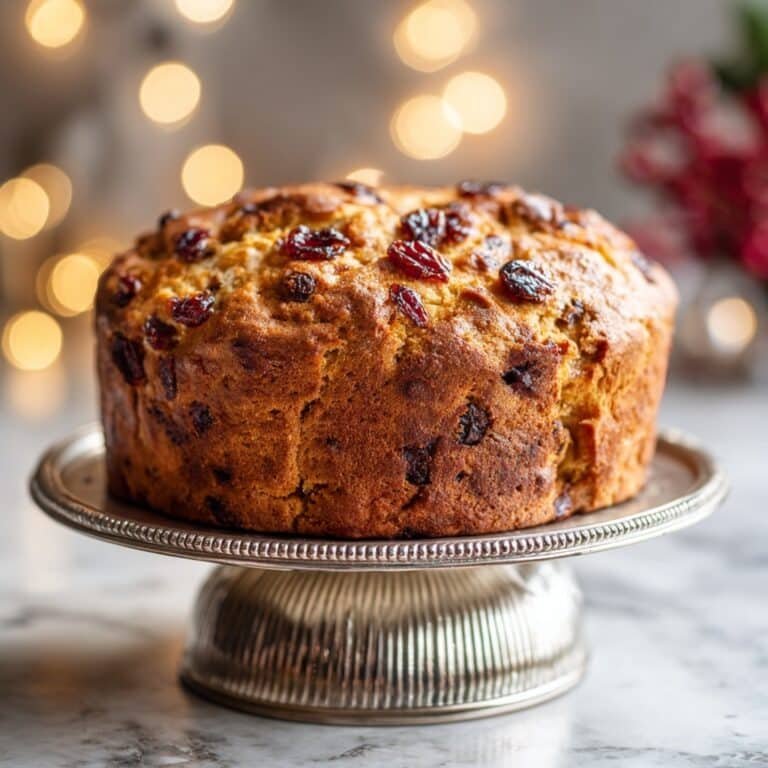
Classic Italian Panettone with Dried Fruits Recipe
This classic Panettone recipe offers a soft, fluffy Italian sweet bread filled with mixed dried fruits and fragrant citrus zest, perfect for festive occasions or a special breakfast treat.
- Total Time: 3 hours 10 minutes
- Yield: 1 loaf
Ingredients
Dough
- ½ cup warm milk
- 2 ¼ teaspoon active dry yeast
- ½ cup sugar
- 4 cups all-purpose flour
- ½ teaspoon salt
- 1 teaspoon vanilla extract
- 1 teaspoon lemon zest
- 1 teaspoon orange zest
- 4 eggs
- ½ cup butter, softened
Fillings
- 1 cup mixed dried fruits (raisins, candied orange peel, etc.)
Instructions
- Activate the Yeast: In a small bowl, dissolve the yeast in warm milk with 1 teaspoon of sugar. Let it sit until frothy, about 10 minutes, ensuring the yeast is active.
- Combine Dry Ingredients: In a large mixing bowl, mix the flour, remaining sugar, and salt thoroughly for even distribution.
- Form the Dough: Add the yeast mixture, vanilla extract, lemon zest, orange zest, and eggs to the dry ingredients. Stir and mix until a cohesive dough forms.
- Knead the Dough: Incorporate the softened butter by kneading until the dough becomes smooth and elastic, about 8 to 10 minutes.
- Add the Fruits: Gently fold in the mixed dried fruits, ensuring even distribution without crushing them.
- First Proof: Place the dough in a greased bowl, cover with a clean cloth, and let it rise in a warm place until it doubles in size, approximately 2 hours.
- Prepare for Baking: Preheat your oven to 350°F (175°C). Grease a panettone mold or a high-sided round cake pan to prevent sticking.
- Shape the Dough: Punch down the risen dough, shape it into a ball, and place it into the prepared mold or pan.
- Second Proof: Cover the dough and let it rise again until it doubles in size, about 1 hour, to achieve a light texture.
- Bake: Bake the panettone in the preheated oven for 40 minutes or until a skewer inserted into the center comes out clean.
- Cool: Remove the panettone from the oven and allow it to cool completely before slicing and serving, to set the crumb and flavor.
Notes
- Use room temperature butter to ensure it incorporates smoothly into the dough during kneading.
- If you don’t have a panettone mold, a high-sided round cake pan works well as a substitute.
- Kneading by hand may take up to 10 minutes; alternatively, use a stand mixer with a dough hook attachment.
- For enhanced flavor, you can soak the dried fruits in warm water or liquor for 30 minutes before adding them.
- Ensure the milk is warm, not hot, to activate the yeast without killing it.
- Store leftover panettone wrapped tightly at room temperature to maintain freshness.
- Prep Time: 30 minutes
- Cook Time: 40 minutes
- Category: Bread
- Method: Baking
- Cuisine: Italian
- Diet: Vegetarian

Leave a Reply